
Kandrzej Archiva Fotografia is my fine art portrait studio where I create large-format black-and-white film portraits for families, collectors, and estates. I call it The Atelier. For more than forty years, I have photographed presidents, business leaders, creative artists, musicians, and many individuals whose stories are equally important. Now, I bring that same tradition to families who wish to create an heirloom for future generations. Each commission begins with the deliberate process of large-format film portraiture and concludes with a museum-quality framed portrait and the transfer of the Master Negative to the family archive.
The Legacy of a Well-Lived Life
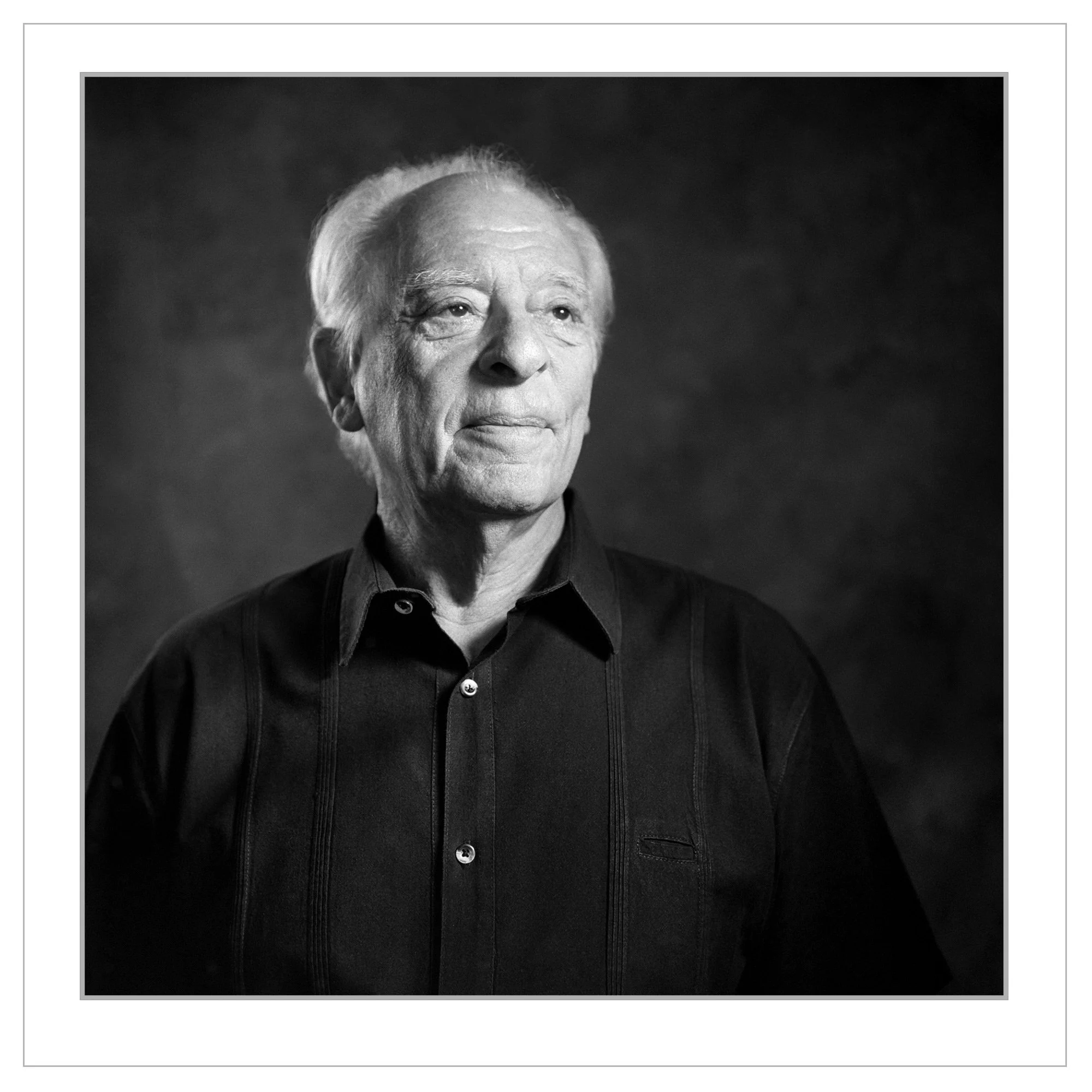
A patriarch portrait made to preserve his presence for the generations who will follow. From my personal photographic archive.
Everyone leaves something behind. Sometimes it's artwork. Other times it's jewelry or other family heirlooms.
Few leave behind a portrait with the presence, dignity, and permanence of a museum portrait—one that looks like it belongs in the National Portrait Gallery.
It becomes part of everyday life. Children grow up with that face on the wall. Years later, their own children do the same. It's a connection to the people who came before them.
Over time, a family's archive may grow to include portraits of grandparents, parents, children, and grandchildren.
The Warmth of a Face
This is why I make these portraits. The warmth of her face becomes part of her family’s story for generations.
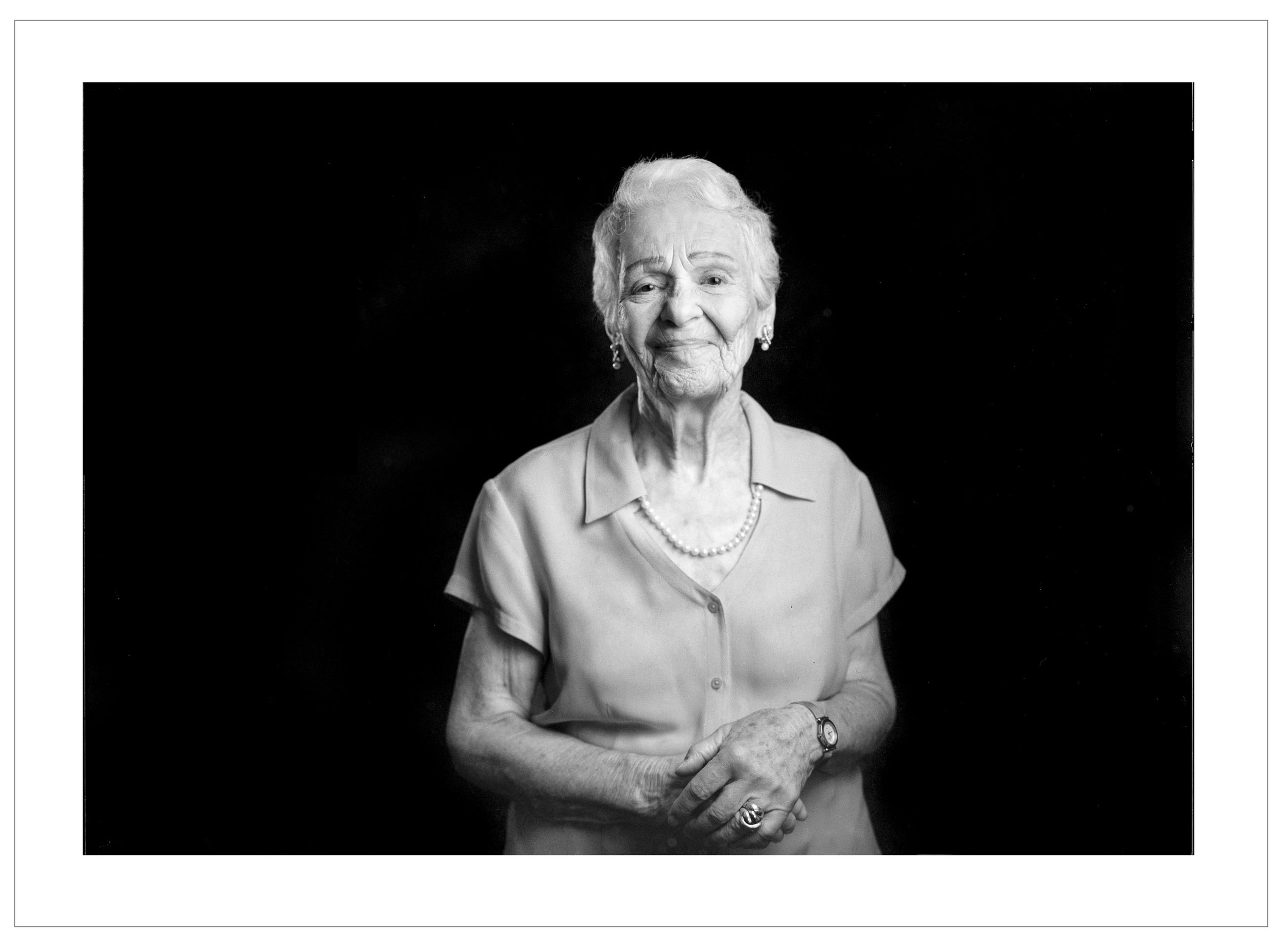
The beauty of large-format black-and-white film portraiture. From my personal photographic archive.
The Art of Seeing People
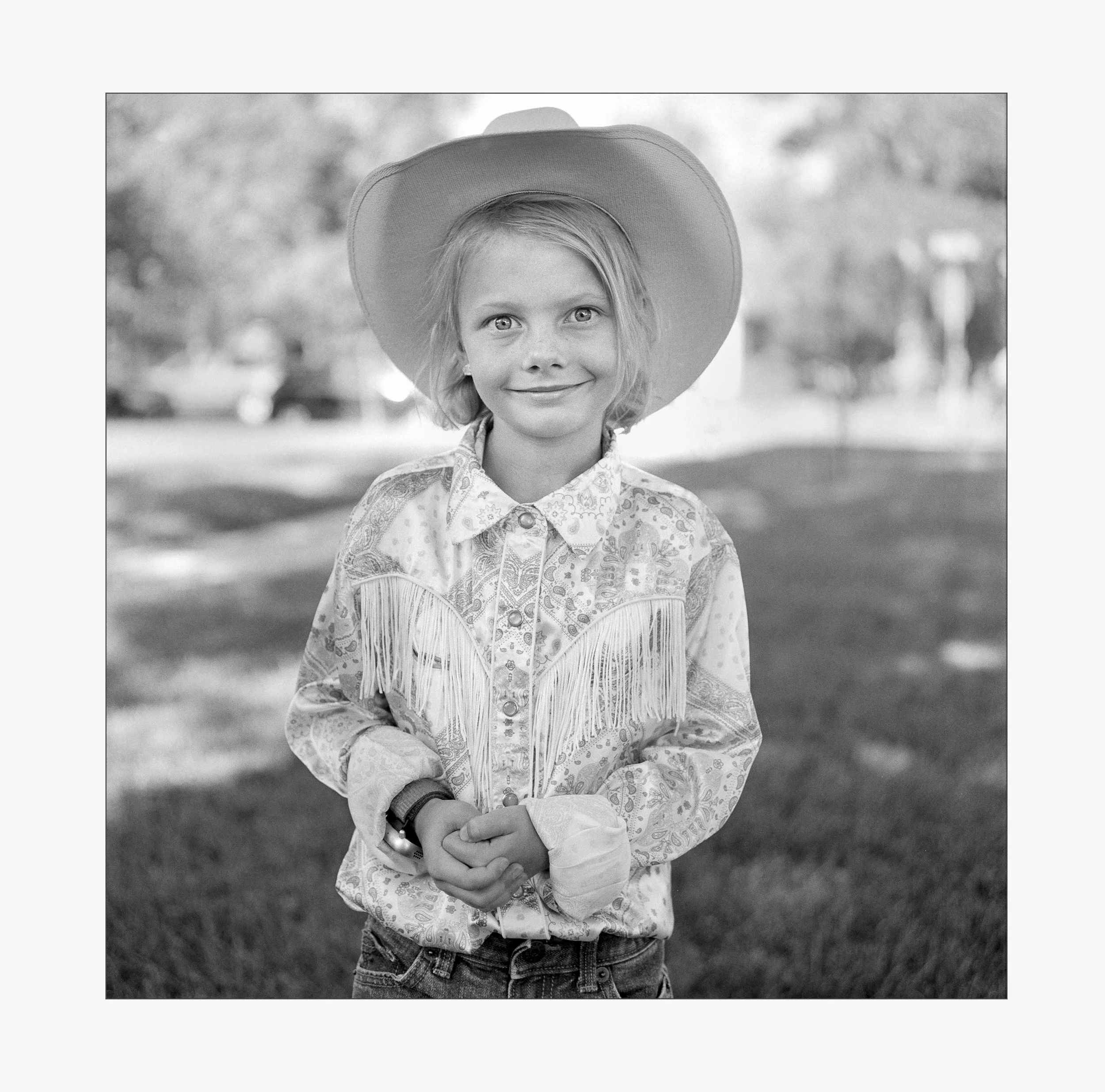
Portrait from a documentary project at a county fair, exploring the people and stories found in everyday life. From my personal archive.
For more than forty years I've worked as a photojournalist, photographing U.S. presidents, CEOs, musicians, artists, and individuals with compelling stories to tell. What I learned while making their portraits went far beyond the technical aspects of photography. I learned how to build trust, draw out character, and recognize the moment someone reveals something genuine in front of the camera.
Every portrait is a collaboration. My role is to create an atmosphere where people feel comfortable enough to reveal themselves, allowing the portrait to reflect not only how they look, but who they are.
In editorial photography, every portrait had to earn its place on a magazine cover or as the lead image in a feature story. Today, every portrait I create is meant to earn its place in a family's home.
Photographers spend much of their lives as witnesses. We stand a step outside the moment, observing while others are living it. I’ve come to understand that the most important photographs are not always made for publication. They are made for the people who will one day ask, "What was my grandmother like?" or "Who was my father when he was young?" Those are the portraits I make now.
The Cameras Change Everything
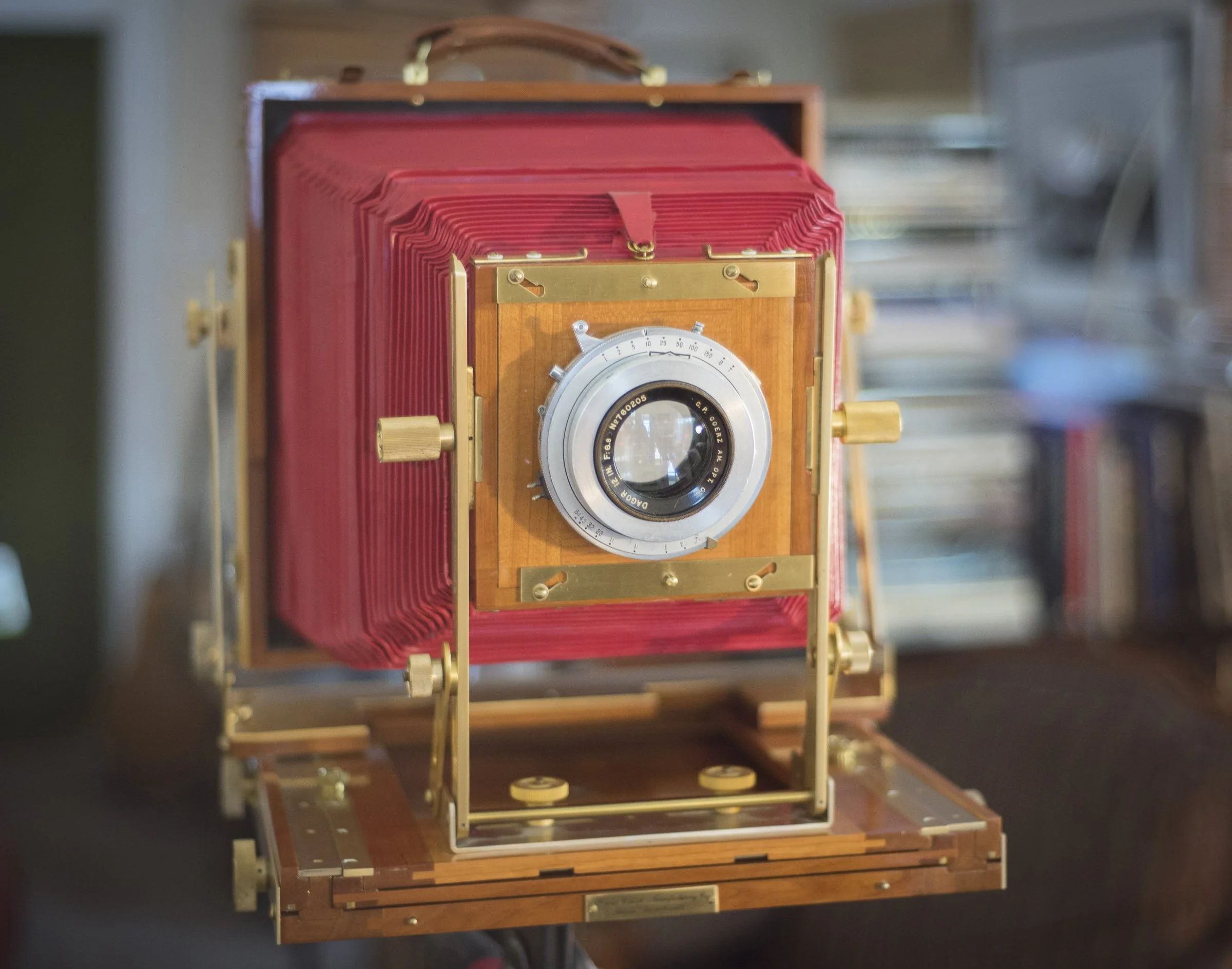
A Wisner large-format camera with a 12-inch Dagor lens and distinctive red leather bellows, used for portrait commissions by K. Andrzej.
Today, I work with a classic wooden large-format camera, which is a central part of the portrait experience. Its size and the deliberate way it works change the way people sit for their portrait. The moment I step beneath the dark cloth, the pace of the sitting changes. People hold themselves a little taller. They become aware that this is not simply another photograph being made, but a portrait that will remain with their family for generations.
Throughout the sitting, I will at times turn to a medium-format camera, the Rolleiflex, when I want to step away from the formality of the large-format camera. Its quiet operation and waist-level viewing allow conversation to continue while subtle changes in expression, gesture, and presence reveal themselves naturally.
Both the Rolleiflex and the large-format view camera have long histories in portraiture, having been used by generations of photographers to portray Hollywood actors, artists, musicians, political leaders, and cultural figures. Together, they create two different ways of seeing a person. The Rolleiflex helps people relax while the large-format camera builds upon that trust to create a portrait of lasting presence. Used in tandem, they often reveal more than either camera could alone.
The Light That Made the Portrait
Every portrait begins with light—the light that reflected from your face in that room, at that moment. It travels through the lens and is recorded onto film, preserving the exact moment when the portrait was made.
That film in the camera was there with you, and is the film that will become yours to keep in your family archive.
One day, your children or grandchildren may hold that very negative in their hands. They will be holding the original piece of film that was made by the light that touched you. To me, that is one of the most beautiful things about film photography.
The Art of Black & White
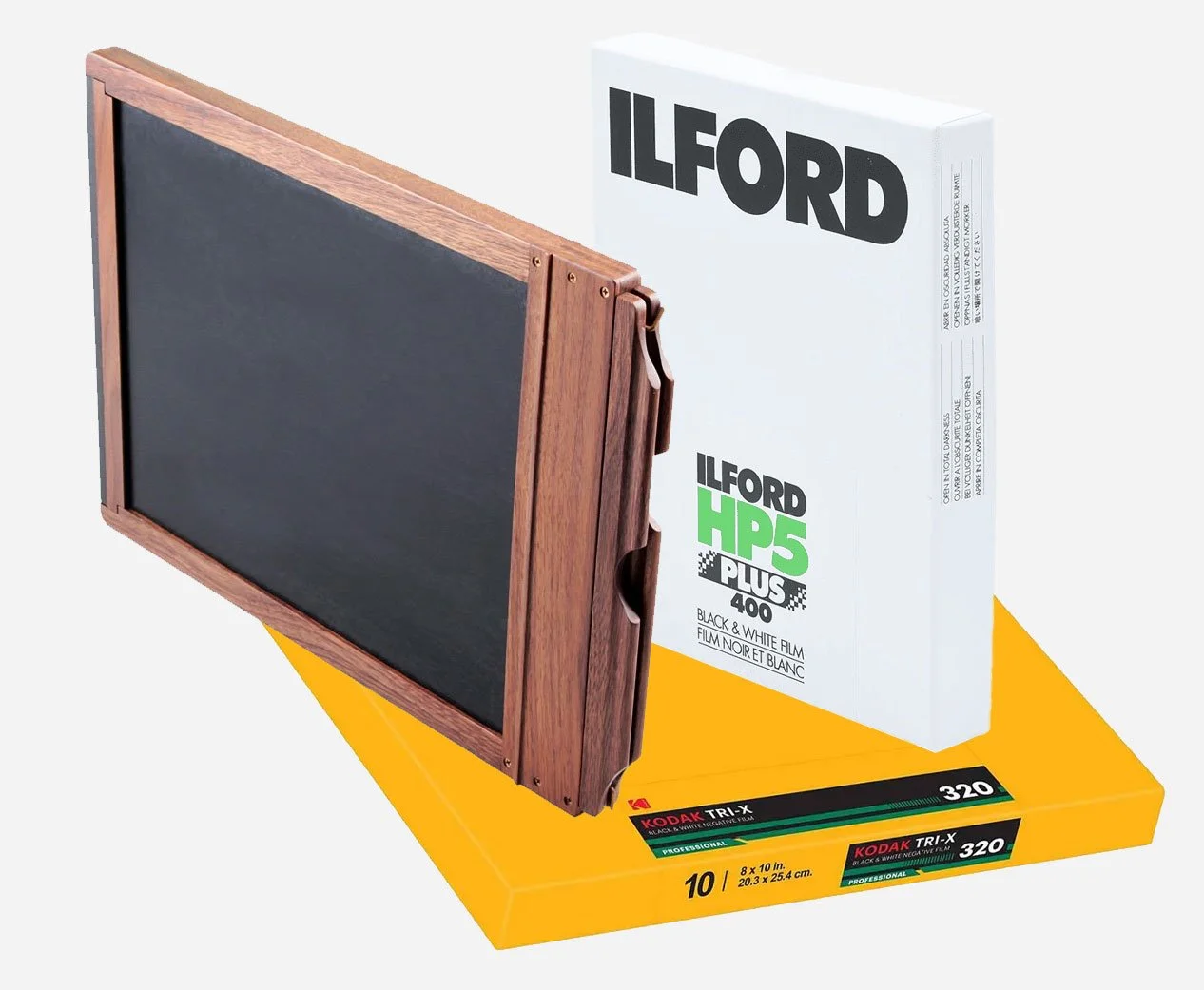
8×10 wooden film holder and large-format film used in the creation of Kandrzej Archiva Fotografia portrait commissions.
Since photography's invention in 1839, black-and-white images have been used to create portraits that endure in museums, archives, and private collections. Each Kandrzej portrait follows this tradition through careful processing, traditional darkroom printing, and archival preservation.
The choice of black-and-white is intentional: it removes the distractions of time and fashion, allowing the person’s character and presence to remain the focus.
The finished portrait does not feel contained by the surface of the print. It has a quiet dimensionality—the impression that the person is stepping forward from the frame, and that the distance between the viewer and the subject has somehow disappeared.
The Atelier Comes to You
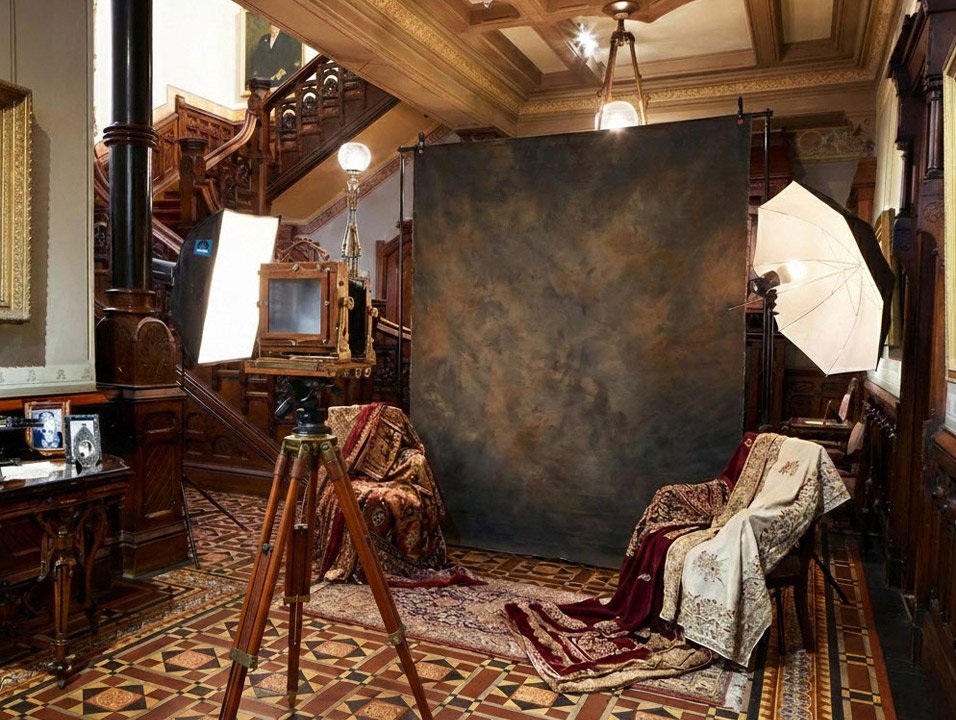
A conceptual view of the Atelier: the large-format camera, hand-painted muslin backdrop, and portrait lighting arrangement prepared before a sitting. Commissioned portrait settings remain private.
After our conversations about the person, the space, and the feeling we wish to create, the Atelier is assembled for the sitting.
Before the sitting begins, I build a portrait studio within your home, estate, or chosen location. For portrait commissions that require travel, I often arrive the day before so that the Atelier is fully prepared—the camera, lighting, and environment already in place when the sitting begins.
The large-format camera is mounted on its tripod, the lighting is carefully positioned, and when appropriate, a hand-painted muslin backdrop is installed behind the subject. For generations, hand-painted backdrops have been part of the visual language of the great portrait studios, appearing behind figures whose portraits became part of history. Their painted surfaces possess a depth and subtle variation that large-format film records beautifully, creating a portrait that feels timeless rather than tied to a particular decade.
The light is created to reveal the person, not simply illuminate them. In the studio, lights are positioned to create the look of the portrait that will be made in the family’s home. If the choice is to work in the landscape, the existing daylight becomes part of the composition.
When the studio is completely set up and the camera is prepared, the sitting becomes something different. It is no longer a moment of being photographed, but an experience created around preserving a person’s presence.
My Artist Statement
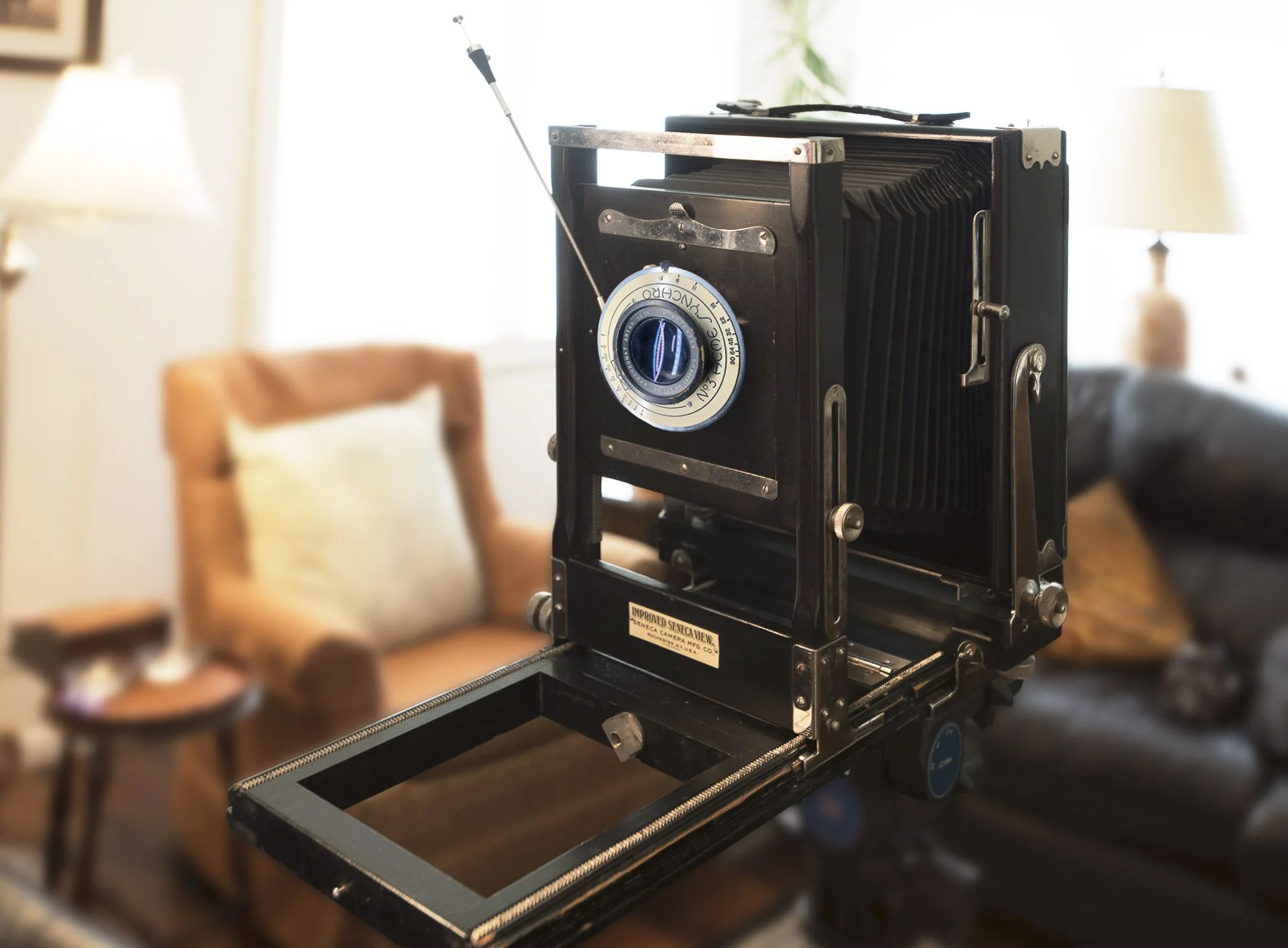
A Seneca View Camera, circa 1906, used for portrait commissions by K. Andrzej.
Families create lasting legacies. I believe portraits deserve the same permanence.
The most meaningful portraits are not created only for the moment they are made, but for the generations who will one day look back and wonder about the people who came before them.
I believe a person reveals themselves to a photographer, not to a camera. The camera is only the instrument. It is the trust between photographer and subject that allows warmth, personality, and character to come through.
The process matters. The large-format camera, the sheet of film, and the quiet rhythm of the sitting create the time and space for something genuine to happen—allowing an image to become more than a photograph.
The tradition of portrait photography has always been shaped by artists who understood that a portrait could reveal more than appearance. Like many of the great portrait photographers—Julia Margaret Cameron, Yousuf Karsh, Irving Penn, and Richard Avedon— I create portraits that reveal something deeper about the people I photograph.
Together, we create a work of art—one that will remain in your family for generations.
— K. Andrzej
The Master Negative: Part of Your Archive
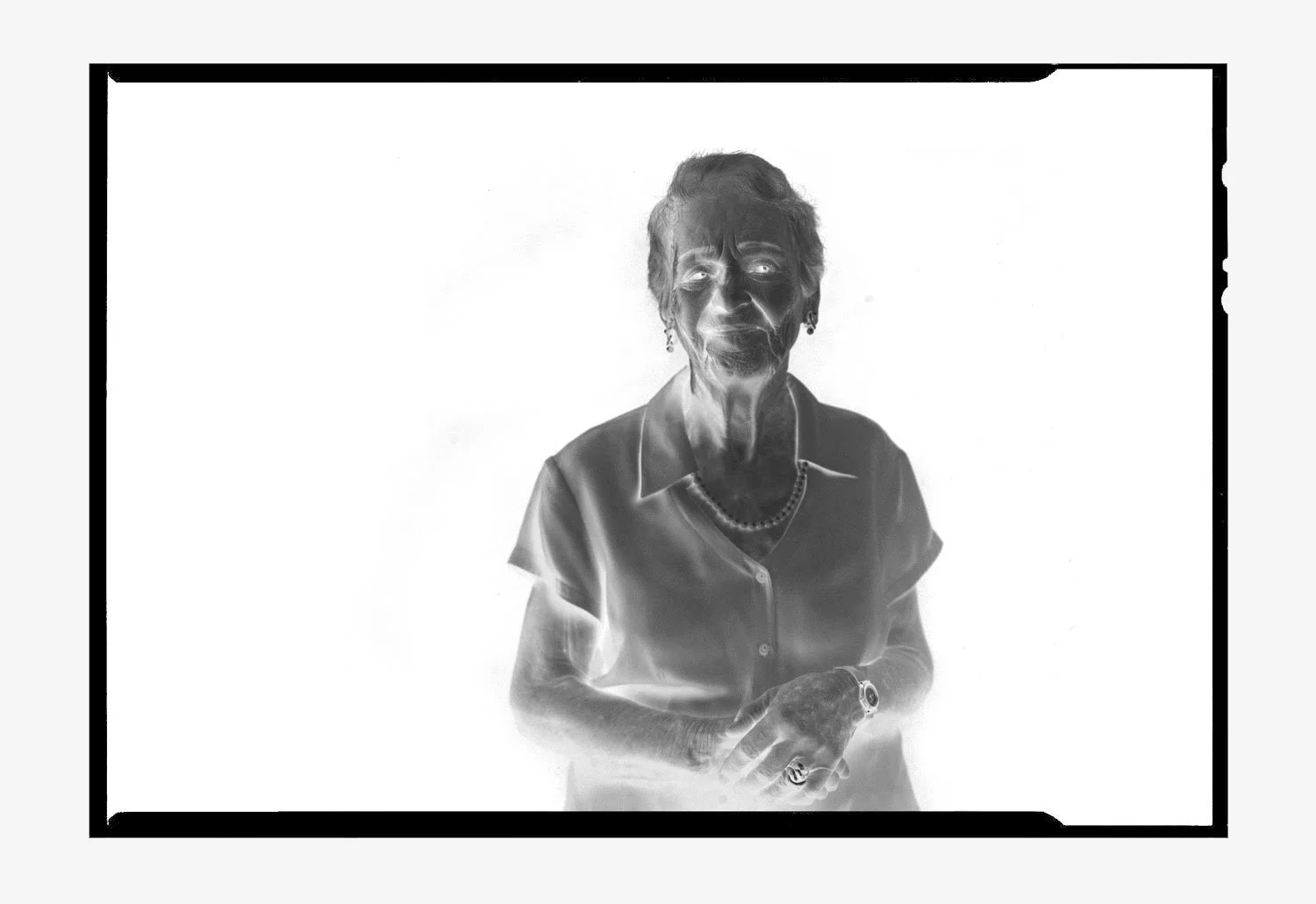
The Master Negative of the large-format portrait is delivered to the family to place in their archive.
During the sitting, we create a series of images, and eventually one negative is chosen to become your Master Negative from which the exhibition print is made, along with any additional prints needed for family members.
Once those are completed, the Master Negative is transferred into your family’s archive. It is the actual sheet of film exposed during your sitting, preserved alongside your family's most treasured possessions.
The Master Negative is more than the source of the finished print. It is a physical piece of photographic history.
It holds the light that was reflected off the subject’s face.
A century from now, the portrait will still hang on the wall—and the negative that created it will still be there.
A Lens that Photographed Hollywood
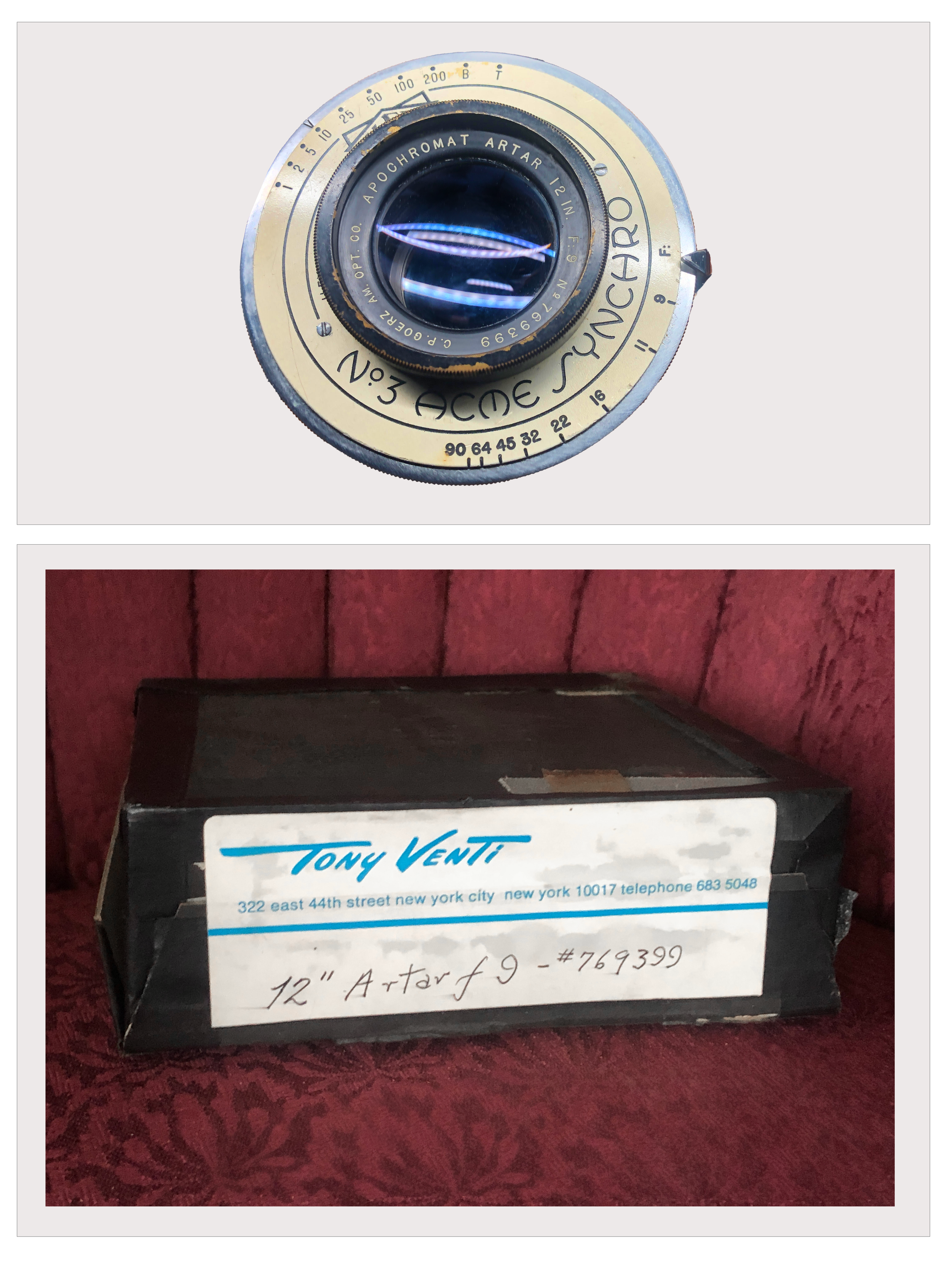
Goerz Apochromat Artar 12” F/9 portrait lens with No. 3 Acme Synchro Shutter. Acquired from the Tony Venti estate and accompanied by estate provenance attributing this lens to portrait work involving a young Marlon Brando.
Among the lenses I use, several were acquired from the estate of New York celebrity photographer Tony Venti, whose career included photographing many of Hollywood's best-known actors and entertainers. One of these is a Goerz Apochromat Artar 12-inch portrait lens, accompanied by estate provenance attributing it to portrait work involving a young Marlon Brando.
Tony Venti worked during a remarkable period in portrait photography, when Hollywood studios and photographers helped create the images that defined generations of actors and entertainers. His portraits were not simply photographs of famous faces. They were carefully crafted collaborations between photographer and subject. The lenses from his studio—the very ones I now use—carry a connection to that tradition: the study of light, expression, and character.
Photography is never just about the camera or the lens, but it's hard not to appreciate holding a piece of photographic history in your hands. I enjoy knowing that the glass that once photographed Hollywood now photographs people who are the celebrities of their own family!
Atelier’s Limited Availability
The Atelier accepts only a small number of private commissions each year.
Each commission is personally guided through every stage of creation—from the initial consultation and portrait sitting to a professionally framed fine art portrait print (up to 20 × 24 inches) and the archival preservation and transfer of the Master Negative into the family archive.
Commission inquiries begin with a private conversation about the person you wish to honor, the story you wish to preserve, and the portrait you wish to create for future generations.
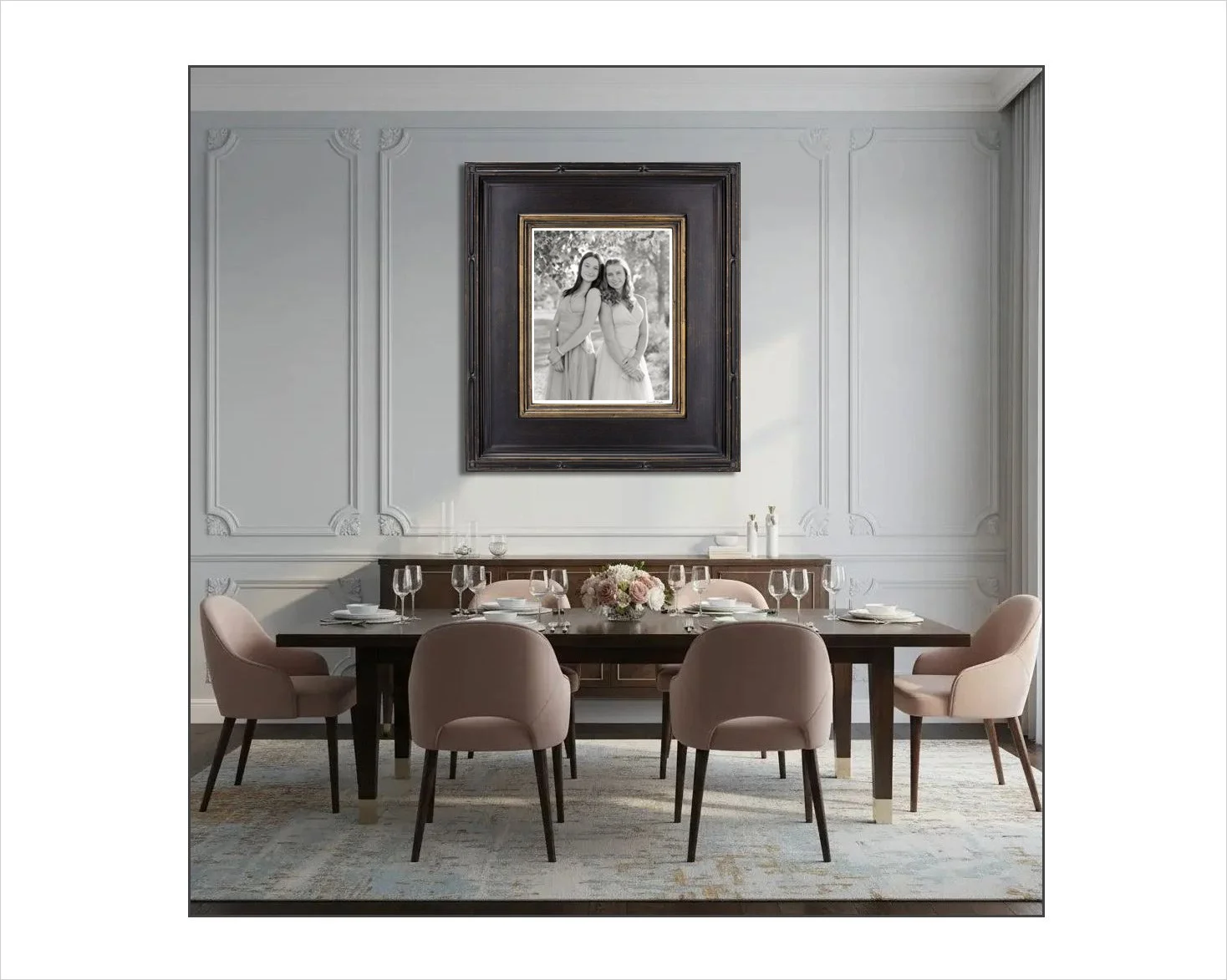
Conceptual visualization of a finished large-format black-and-white portrait from my personal photographic archive. To protect client privacy, commissioned installations are never photographed or published.
A Note on Client Privacy
The private commissions created through Kandrzej Archiva Fotografia remain confidential. Names, family histories, homes, and finished commissioned portraits are not shared publicly without permission. The photographs shown throughout this site are drawn from my personal photographic archive and illustrate the visual language, craftsmanship, and process that define Kandrzej Archiva Fotografia.
The Rolleiflex: The Quiet Advantage
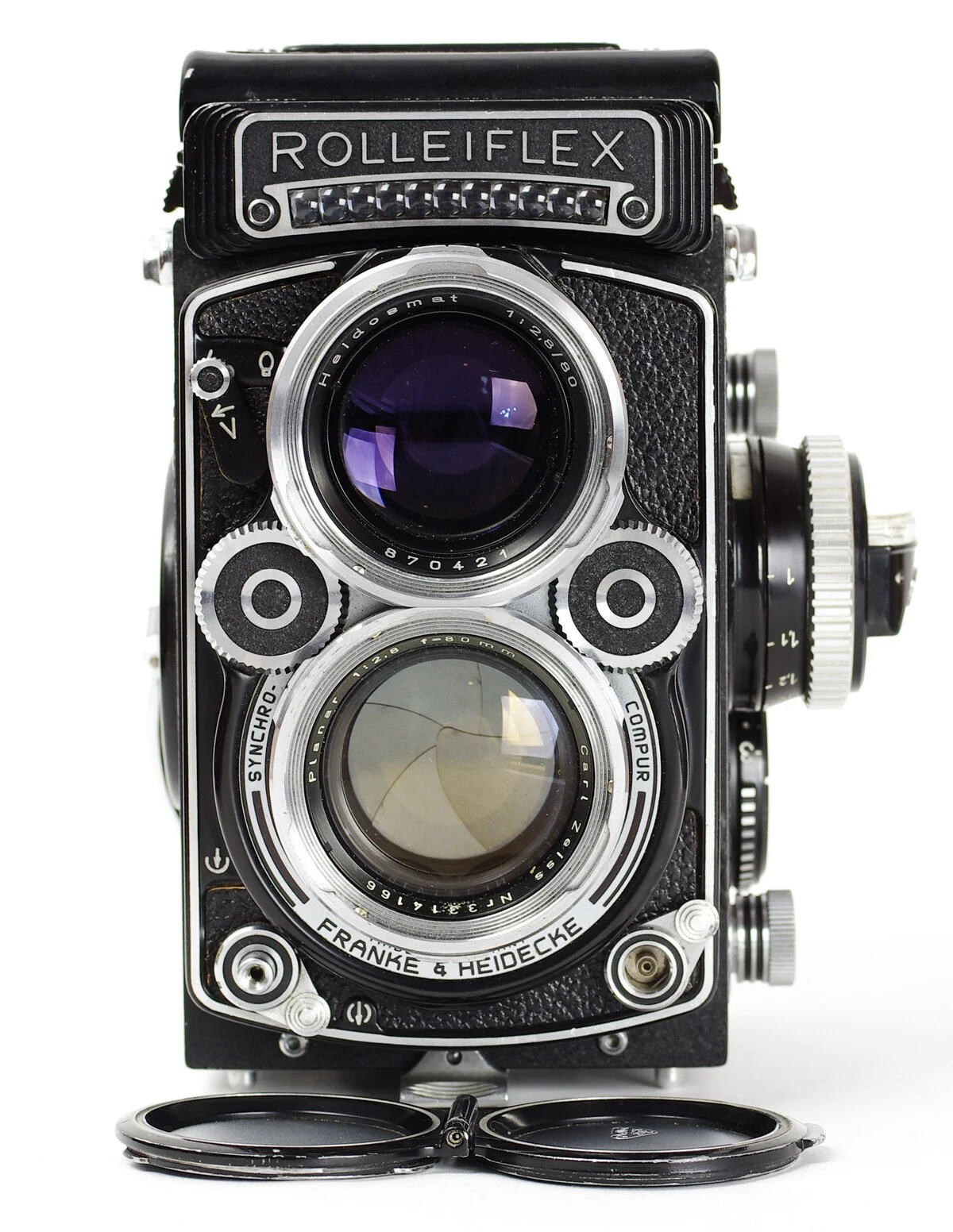
The large-format camera is at the center of all the work made by Kandrzej Archiva Fotografia. It’s the camera to create a deliberate, timeless portrait. But arriving at that portrait is a process.
The Rolleiflex, a slightly smaller camera, has a different way of working. Held at waist level, it changes the relationship between photographer and subject. The sitter is not looking directly into a large camera at eye level. Conversation continues during the session. The awareness of the camera begins to disappear.
In those moments, people often settle into themselves. A hand finds its way back to a familiar position. A natural expression appears. A gesture returns. The person beneath the formal pose begins to emerge.
Sometimes those moments become the portrait. Other times, they are what make the large-format portrait possible.
The quiet conversation, the small exchanges, and the time spent with the Rolleiflex allow trust to develop.
The Commission
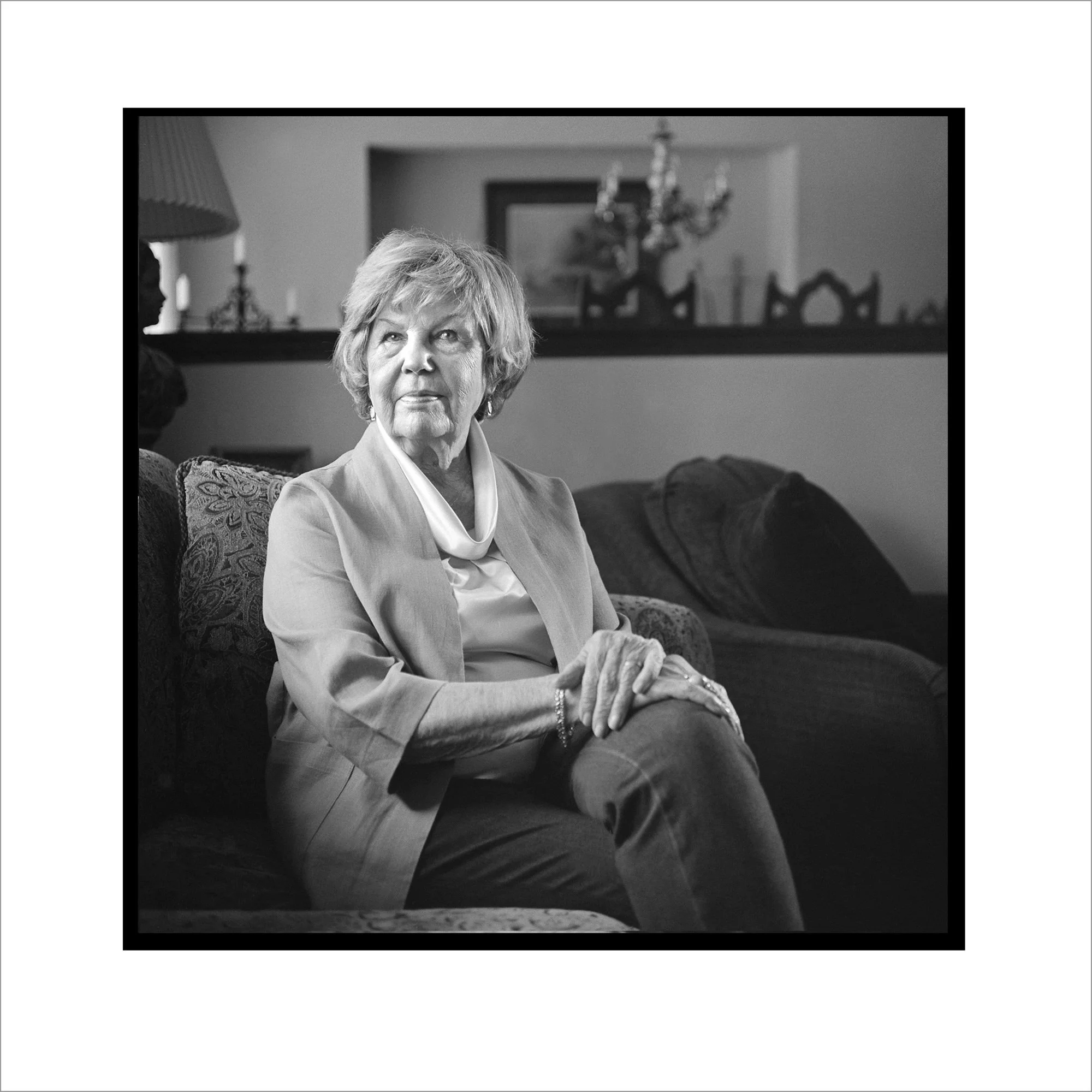
A matriarch portrait. From my personal archive.
Every commission is built around one finished portrait, created for the place where it will live—a family home, estate, library, or private collection. During the sitting, I create a number of individual negatives. Each one represents a different moment. Sometimes the smallest change in expression reveals the portrait.
After the negatives have been developed, I review each image carefully. Together with the family, we discuss the portraits and consider which image most truthfully preserves the person—the balance of expression, character, composition, and presence that allows the portrait to endure.
While the large-format camera is the foundation of the Atelier, the final Master Negative is chosen for the portrait itself—not the camera that created it. In some cases, the image that best preserves a person’s presence may be made with the Rolleiflex.
Every portrait is beautiful in its own way. The challenge is finding the one that has something more—the twinkle in the eye, the slight turn of the mouth, a quiet expression that reveals something deeper about who they are. It might be one where they completely let their guard down or glanced away from the camera and the light revealed something in their eyes. It is that small, almost unrepeatable moment that allows one image to rise above the others and become the portrait we set out to make.
Every commission includes one professionally framed fine art portrait print, up to 20 × 24 inches.
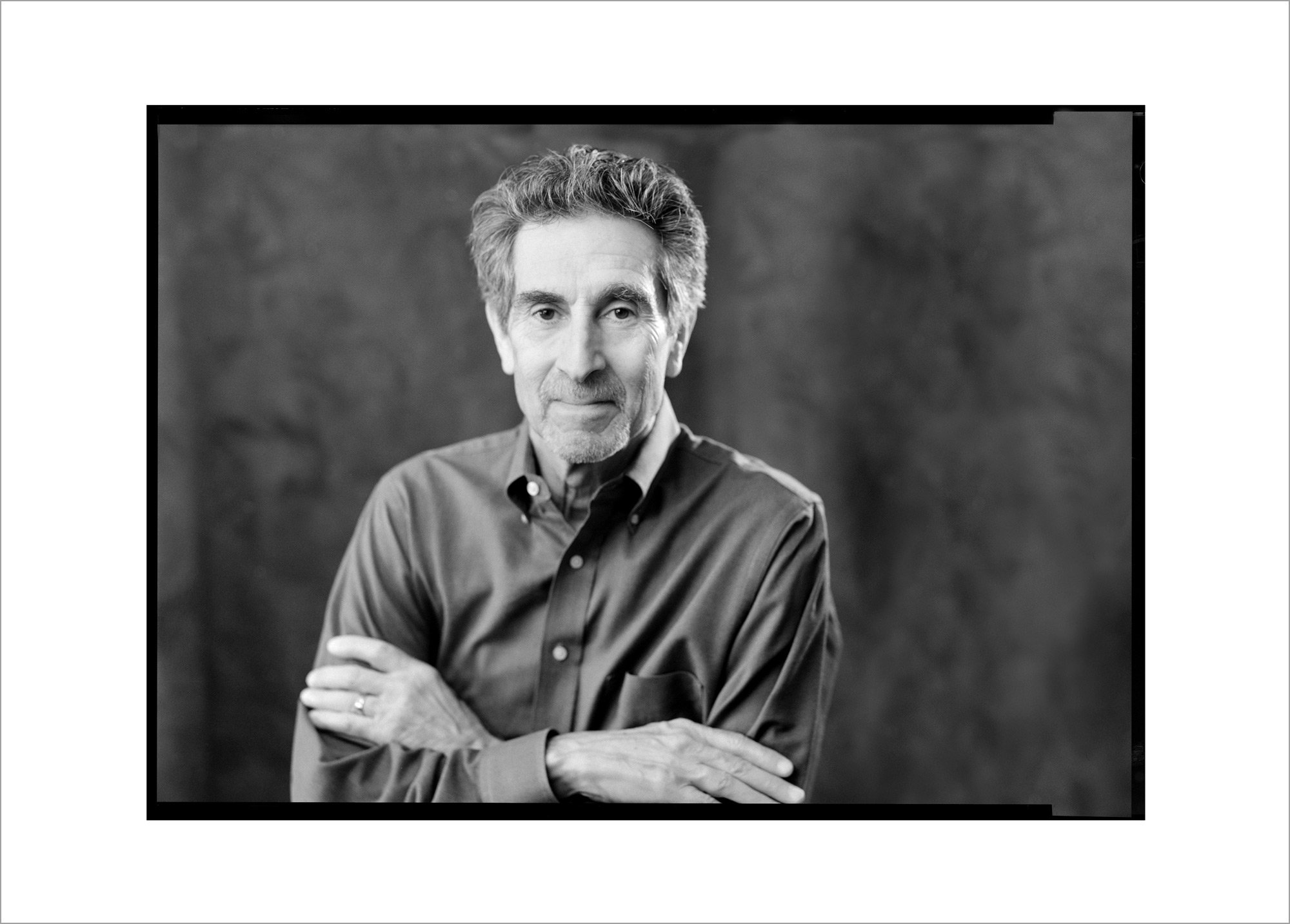
Large-format patriarch portrait made on black-and-white gelatin silver film. From my personal archive.
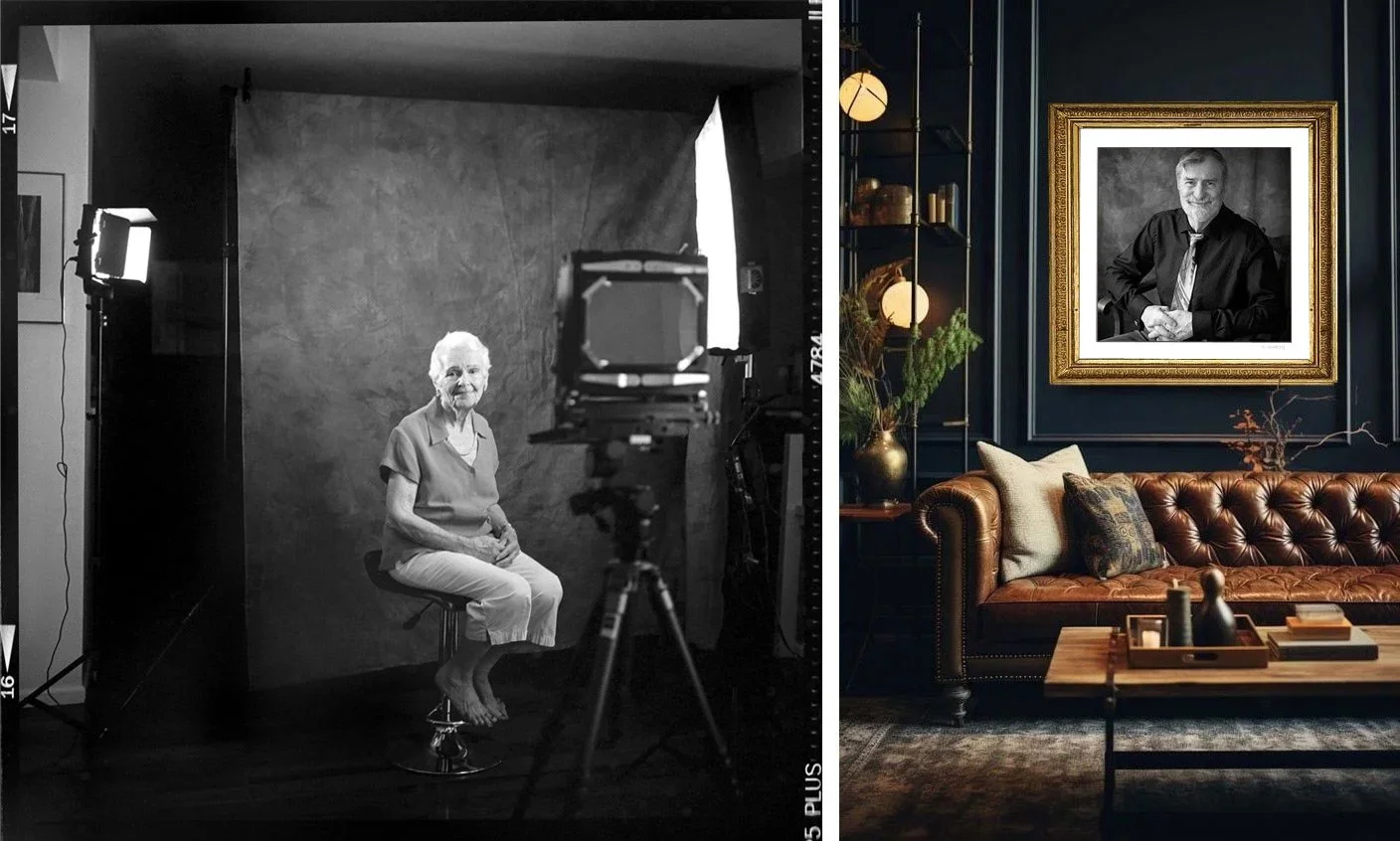
The Atelier in practice (left), from my private archive, shown alongside a conceptual visualization (right) illustrating how a finished heirloom portrait may be displayed in the home. Commissioned installations are not photographed or published.
A Century of Photographic Heritage
My Great-Grandfather — Szufnarowa, Poland
My great-grandfather began making photographs in Szufnarowa, Poland, around the turn of the twentieth century. In this village in southeastern Poland, his fascination with photography began a tradition that would continue through four generations of our family.
Antoni — Coming to America
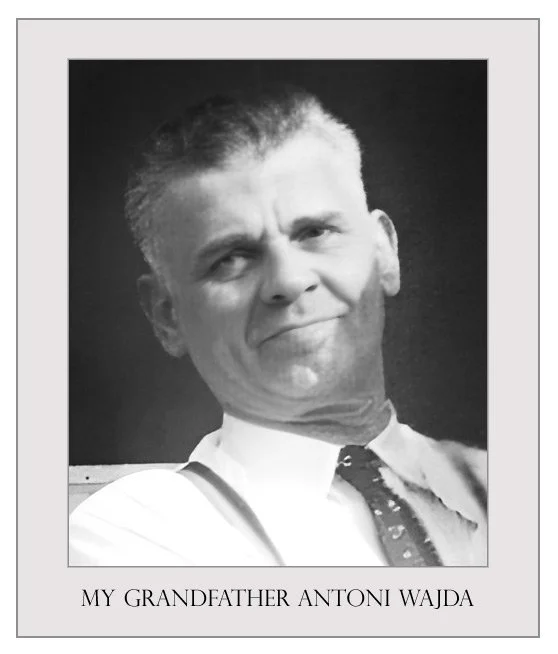
In 1927, my grandfather Antoni sailed from Liverpool to New York and settled in Philadelphia. He brought the family's photographic tradition with him.
As cameras evolved from wooden view cameras to medium format, he embraced the waist-level Rolleiflex camera, a tool that allowed him to document everyday life—his neighborhood, the changing urban scene, and his own family life in Philadelphia.
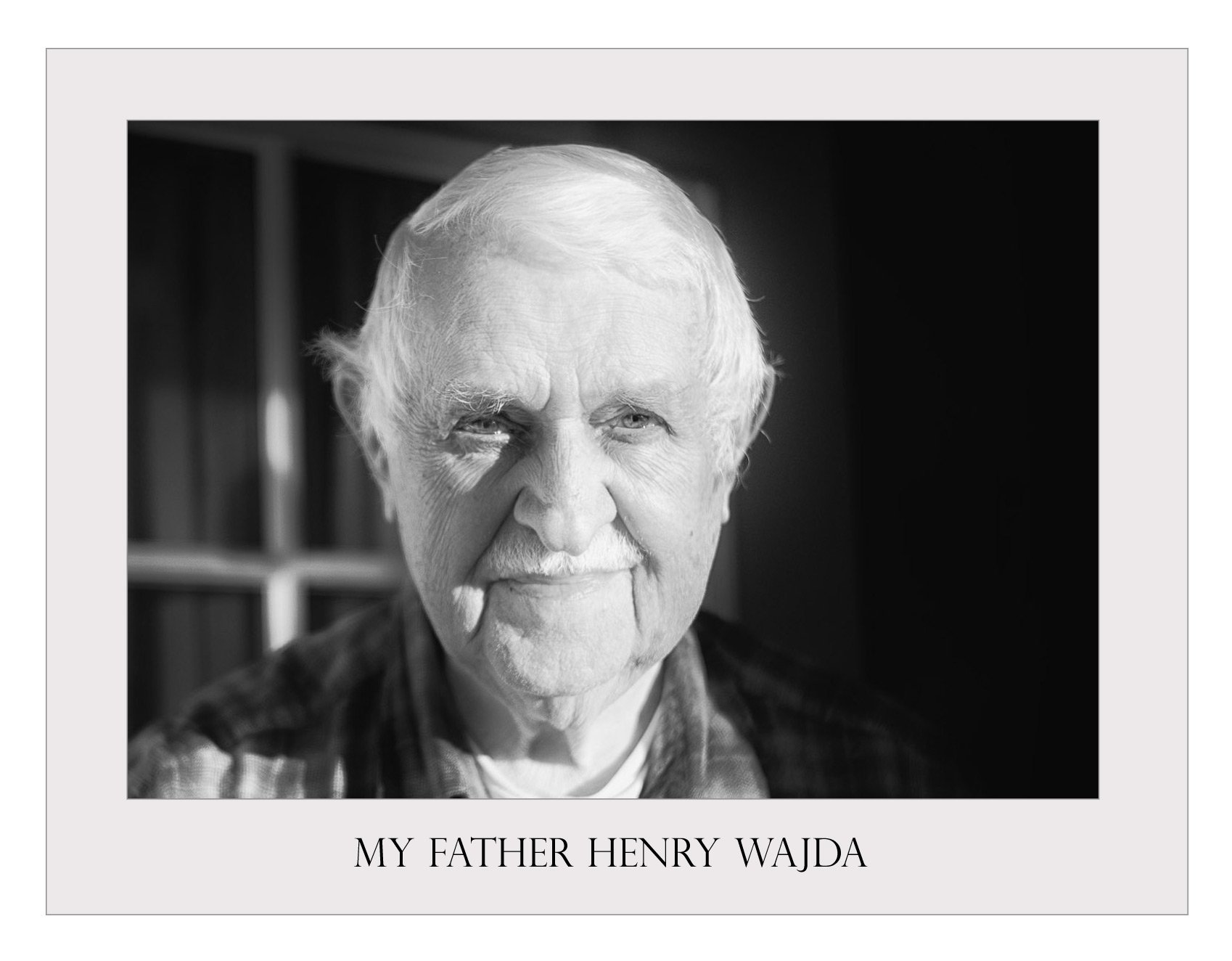
Henry — Philadelphia
My father continued the photography tradition, though by the 1950s had transitioned to 35mm film.
His Kodak Retina IIIc traveled with him during Army service before becoming the camera that recorded his family's everyday life—growing up in Port Richmond, weekend shopping at the Italian Market, birthdays, holidays, and his young family.
Eventually that camera became mine. It was with that camera that I first learned photography.
A Shared Language of Light
Our family has long carried the story of a meeting between my great-grandfather and a young art student in postwar Kraków — Andrzej Wajda, who would later become one of Poland’s most celebrated filmmakers.
The story is that they connected through a shared fascination with photography — two people drawn to the same language of light, composition, and visual storytelling.
Photography and cinema have always shared this visual language. Light and shadow, recorded on film, have the ability to transform a fleeting moment into something lasting. Many of today's finest filmmakers still choose film for their most prestigious motion picture work—from award-winning cinema to acclaimed television productions.
Film remains a medium chosen when permanence, craftsmanship, and intention matter.
The Name of the Atelier
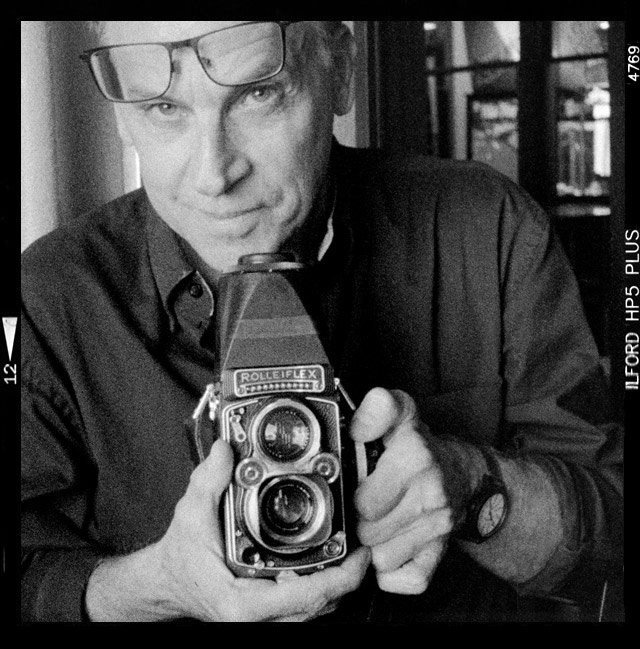
K. Andrzej at a portrait commission.
Kandrzej combines my first initial K with the Polish form of my middle name Andrew. The name also reflects a personal connection to Andrzej Wajda and the Polish tradition of visual storytelling—where light, composition, and gesture become a language of human experience.
Archiva reflects my belief that portrait photographs should last for generations as part of a family's archive.
Fotografia is the Polish word for photography to honor my family’s roots and the tradition that brought me here.
Today I work from the foothills of Boulder, Colorado, while accepting portrait commissions throughout the world.
The Atelier Registry
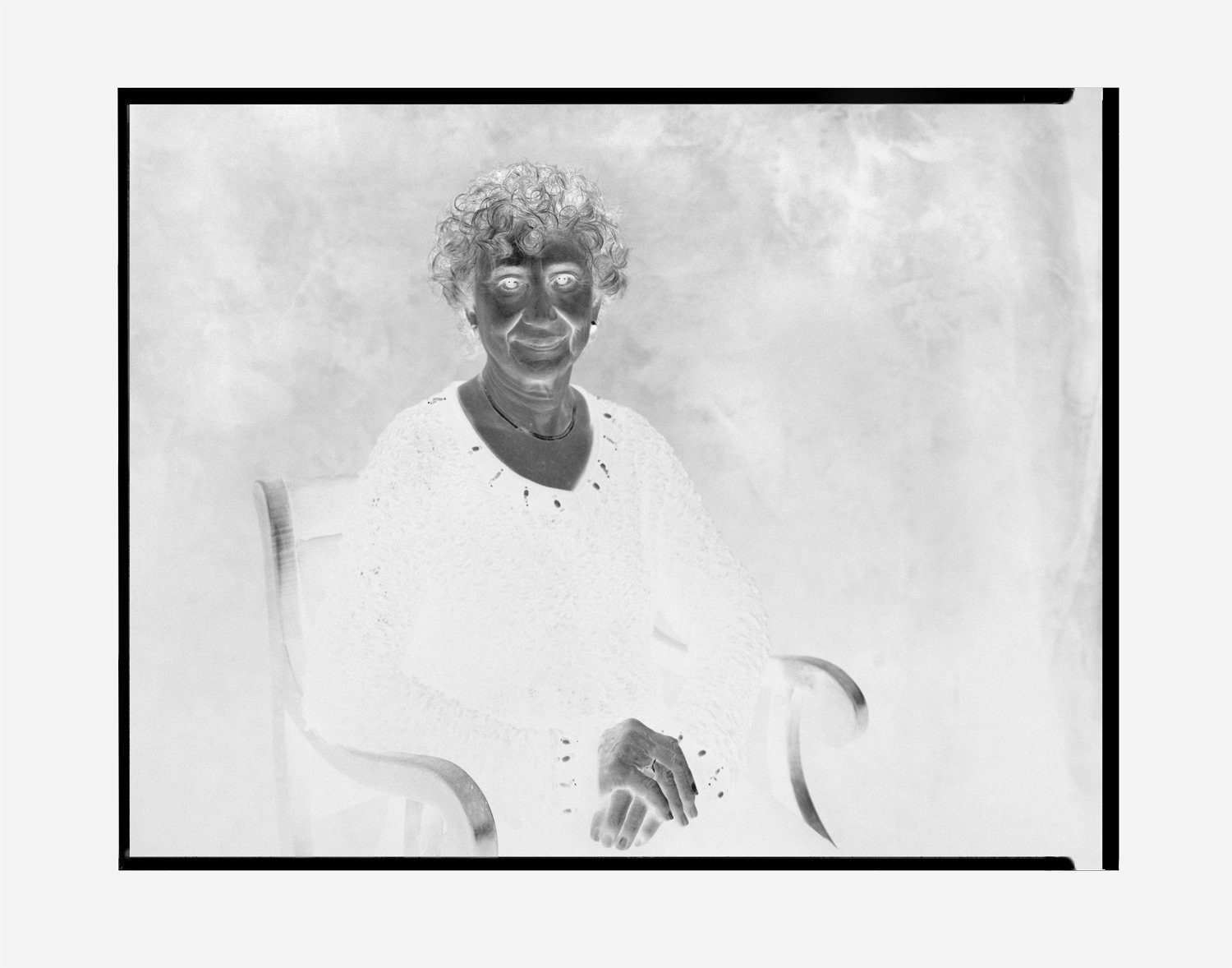
Large-format film Master Negative entrusted to your family archive.
Each commissioned portrait remains protected as an original work of art, with its archival preservation and future presentation guided by the artist and the family through the commission agreement.
Availability is discussed privately.
Protocol of Discretion
Privacy and discretion are fundamental to the studio practice. The families I photograph trust me with something deeply personal.
Names, homes, family histories, and finished portraits remain confidential unless permission is given to share them.
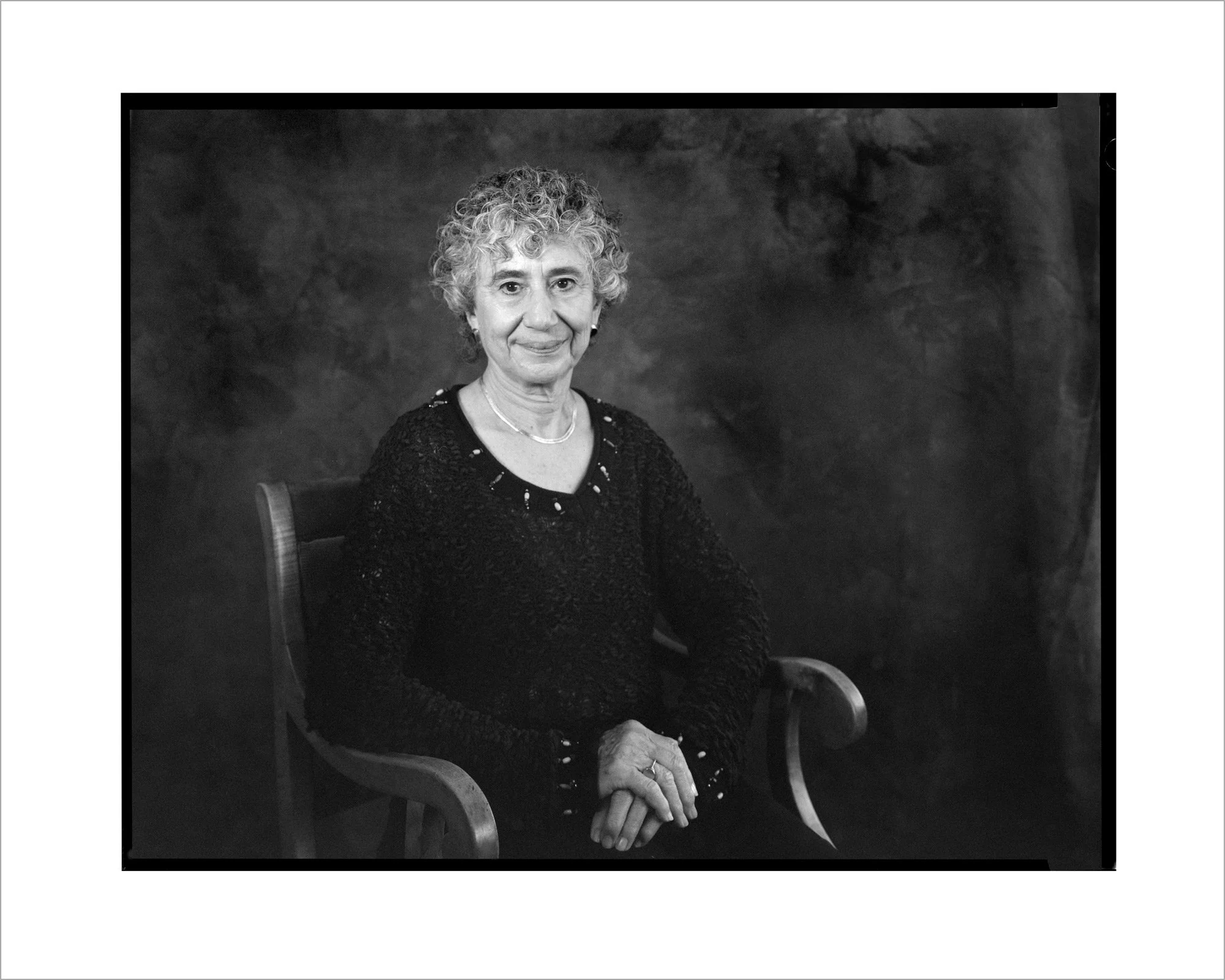
Large-format portrait made on black-and-white gelatin silver film. From my personal archive.
Private Commission Inquiry
If you're considering a portrait commission for yourself, your family, or your collection, I'd be happy to begin with a conversation.
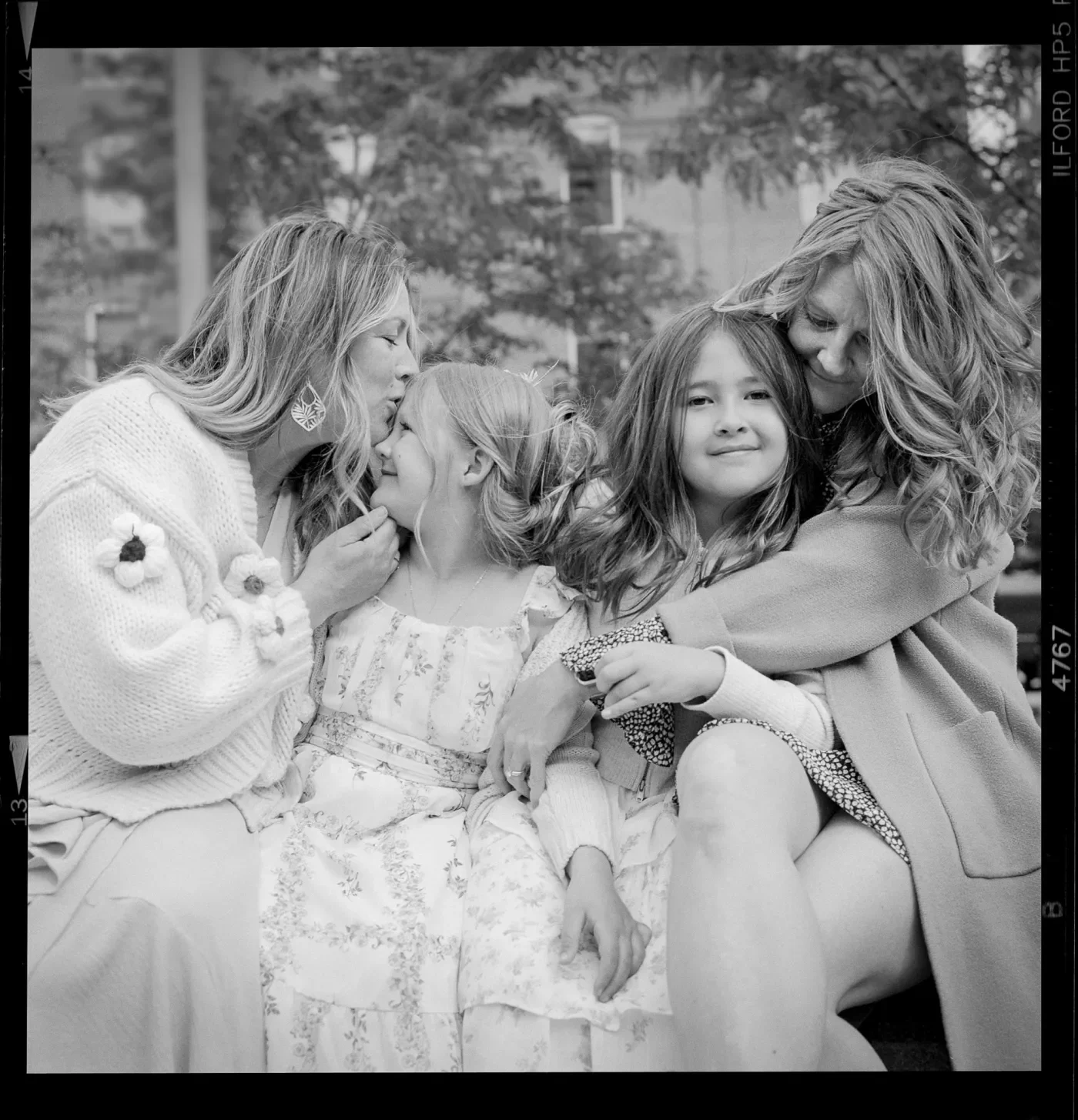
A dear moment of family life. From my personal photographic archive.
What Happens Next
During our initial conversation, we'll discuss the people to be photographed, where the portrait will live, and the atmosphere you wish to create. If we're a good fit, we'll schedule the sitting and begin designing the portrait together.